
Our Approach to Technical Analysis
We combine Elliott Wave, Fibonacci analysis, intermarket analysis, and traditional technical indicators into a structured framework that helps traders cut through noise and navigate markets. Start a TrialA Structured, Price-Driven Framework
Global macro markets are shaped by the constantly shifting forces of economic cycles, trade flows, geopolitics, and central bank policy. In this environment of noise and conflicting narratives, technical analysis becomes indispensable, and price action a crucial arbiter.
Traders need a structured, disciplined lens on price action – one that cuts through complexity and helps them stay aligned.
MCP exists to deliver that insight. Our research is written to stay grounded in price action and to help traders identify the signal from the noise of the narrative.
We believe technical analysis is a vital part of any trader’s research mix. When used alongside fundamental insight, it creates a more complete view of the market. Our role is to deliver independent technical perspectives, drawing on years of market experience, to complement your process.
Independence is critical. In a landscape saturated with narrative, opinion, and noise, our work brings focus to what truly matters: the message of price.
Here’s how we approach that task.
Elliot Wave Analysis
A structured, probabilistic framework for global markets mapping trends, key levels, scenarios, and directional cues.
Intermarket Analysis
The application of technical analysis to global, intermarket linkages.
Traditional Technical Indicators
Distilling price action into a structured, probabilistic outlook, keeping you prepared for what’s next.
Elliot Wave Analysis
At the core of our framework is the belief that price reflects human behaviour.
Our work is grounded in Elliott Wave theory, a methodology that offers a forward-looking, probabilistic view of market behaviour. It explores the nature of market psychology, revealing patterns in price action that unfold across all timeframes. These movements are not random, but expressions of collective optimism and pessimism, or waves, that repeat in recognizable structures.
By identifying these patterns, we can build a structured view of where price may be headed, not just where it’s been.
A Brief Introduction to Elliot Wave
“The Wave Principle” is Ralph Nelson Elliott’s discovery that social, or crowd, behaviour trends and reverses in recognisable patterns.
Using stock market data, Elliott isolated thirteen patterns of movement, or “waves,” that recur in market price data and are repetitive in form, but are not necessarily repetitive in time or amplitude. He named, defined, and illustrated the patterns. He then described how these structures link together to form larger versions of those same patterns, how they in turn link to form identical patterns of the next larger size, and so on.
The Wave Principle is a catalog of price patterns and an explanation of where these pattern forms are likely to occur in the overall path of market development.
Elliott’s descriptions constitute a set of empirically derived rules and guidelines for interpreting market action. Elliott claimed predictive value for The Wave Principle, which now bears the name, “The Elliott Wave Principle.”
Under the Wave Principle, every market decision is both produced by meaningful information and produces meaningful information. Each transaction, while at once an effect, enters the fabric of the market and, by communicating transactional data to investors, joins the chain of causes of others’ behavior.
As the forms are repetitive, they have predictive value. Sometimes the market appears to reflect outside conditions and events, but at other times it appears entirely detached from what most people assume are causal conditions. The market is not propelled by the linear causality to which one becomes accustomed in the everyday experiences of life. Nor is the market the cyclically rhythmic machine that some declare it to be. Nevertheless, its movement reflects a structured formal progression. That progression unfolds in waves.
Waves are patterns of directional movement. More specifically, a wave is any one of the patterns that naturally occur under the Wave Principle.
There are two modes of wave development: motive and corrective.
Motive waves have a five-wave structure, while corrective waves have a three-wave structure or a variation thereof.
In his 1938 book, The Wave Principle, and again in a series of articles published in 1939 by Financial World magazine, R.N. Elliott pointed out that the stock market unfolds according to a basic rhythm or pattern of five waves up and three waves down to form a complete cycle of eight waves. The pattern of five waves up followed by three waves down is depicted in Figure 1-1.
Figure 1-1

Source: “Elliott Wave International”
The Benefits of Using Elliot Wave Analysis
Elliott Wave can be a powerful analytical tool when applied correctly and consistently. It helps create order from perceived chaos. Some of the key benefits for trading:
- Provides a framework to construct a clear roadmap of probabilistic price paths.
- The fractal nature of Elliott Wave means it can be applied over multiple timeframes and across asset classes.
- Identifies the direction of the dominant market trend.
- Distinguishes between trending and correcting markets.
- Determines the maturity of the trend as we look for important market turning points.
- In combination with Fibonacci analysis it helps provide measured price targets.
- Identifies specific points of ruin where you know the trade is wrong.
The Challenge of Using Elliot Wave Analysis
Elliott Wave is a powerful tool for analyzing market behavior, but mastering its full framework is a significant undertaking. The discipline requires building an advanced knowledge of a vast catalog of recurring price patterns, a skill that takes time, dedication, and a natural aptitude for pattern recognition. For many, the dense and often confusing terminology can become a barrier to entry, obscuring the powerful insights that lie within.
This is where the real value of our Mars Market Update analysis lies. We remove the burden of mastering Elliott Wave analysis and, instead, deliver its most valuable output. Our research applies a disciplined, structured, and pragmatic approach to the Elliott Wave Principle, distilling complex price action into a clear, forward-looking outlook.
We exist to be your shortcut to a deeper understanding of market cycles, helping you cut through the complexity and unlock the true value of Elliott Wave analysis as a vital component of your trading process.
See how we apply this framework in our research.
Elliot Wave Resources & Recommended Reading
A more detailed description of the Wave Principle can be found here… EW Basics Frost & Prechter’s book, “Elliott Wave Principle – Key to Market Behavior” is the primary reading guide for budding Elliotticians https://www.amazon.com/Elliott-Wave-Principle-Market-Behavior/dp/1616040491


Intermarket Technical Analysis
Intermarket Technical Analysis focuses on the relationships between various market sectors, including stocks, bonds, commodities, and currencies to provide insights into how to use market activity to inform trading decisions. The importance of understanding these interrelationships is to gain directional clues in trading. It is a key reference when applying the concept of technical analysis to take intermarket relationships into consideration as markets don’t move in isolation. John Murphy’s book, “Intermarket Technical Analysis” is the go-to reference for understanding these intermarket relationships.
“What this means for us as traders and investors is that it is no longer possible to study any financial market in isolation, whether it’s the U.S. stock market or gold futures. Stock traders have to watch the bond market. Bond traders have to watch the commodity markets. And everyone has to watch the U.S. dollar. So, who needs intermarket analysis? I guess just about everyone; since all sectors are influenced in some way, it stands to reason that anyone interested in any of the financial markets should benefit in some way from knowledge of how intermarket relationships work.” John Murphy
If it can be shown that all markets—financial and nonfinancial, domestic and global—are interrelated, and that all are just part of a greater whole, then it becomes clear that focusing your attention on only one market without consideration of what is happening in the others leaves you in danger of missing vital directional clues. This premise highlights the importance of understanding intermarket analysis within a global macro framework and why it is an integral component of our global market analysis at Mars Capital Partners.
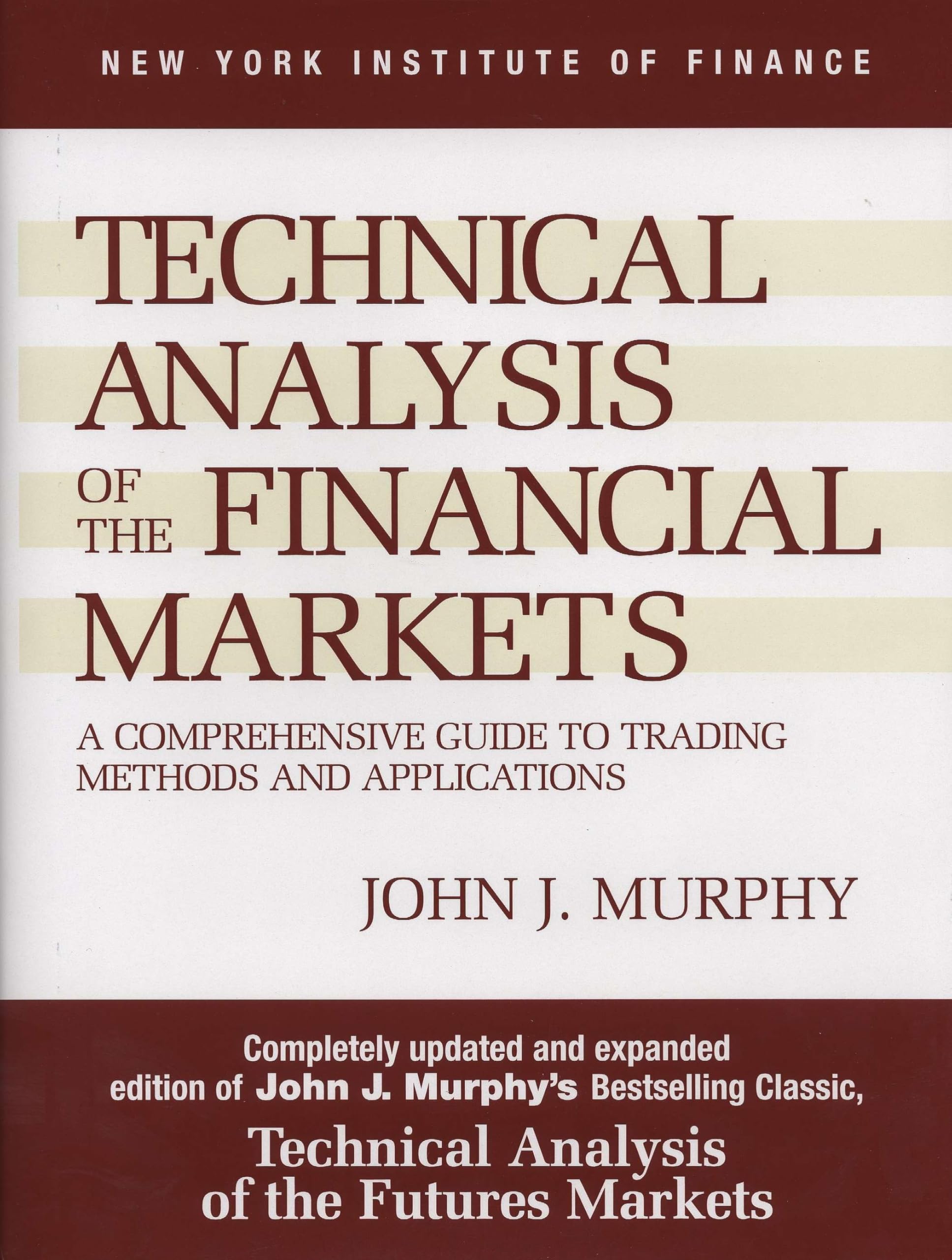
Technical Analysis of the Financial Markets - John J Murphy
Technical Indicators
Classic Technical Analysis as embodied by Edwards and Magee’s “Technical Analysis of Stock Trends” is rooted in the study of price and volume data to identify trends and predict future market behavior. This approach emphasizes the importance of charts as visual representations of price movements, making it easier for traders to identify trends and patterns. Edwards and Magee’s work continues to influence market participants, providing a framework for understanding and navigating the complexities of financial markets.
Technical Analysis according to Edwards and Magee is “the science of recording, usually in graphic form, the actual history of trading in a certain stock or in “the Averages” and then deducing from that pictured history the probable future trend… The market price reflects not only the differing value opinions of many orthodox security appraisers, but also all the hopes and fears and guesses and moods, rational and irrational, of hundreds of potential buyers and sellers, as well as their needs and resources – in total… the one precise figure at which a buyer and a seller get together and make a deal. This is the only figure that counts.”
In brief, the going price, as established by the market itself, comprehends all the fundamental information the statistical analyst can hope to learn and much else besides of equal or even greater importance. (ie, all information is “in” the price of a security). Charts are the working tools of the technical analyst. The tools include identifying trends, support and resistance, consolidation formations, reversal patterns, gaps, trendlines and channels, momentum oscillators, moving averages, etc. all with the purpose of identifying “where a market is” within its primary trend across multiple timeframes.
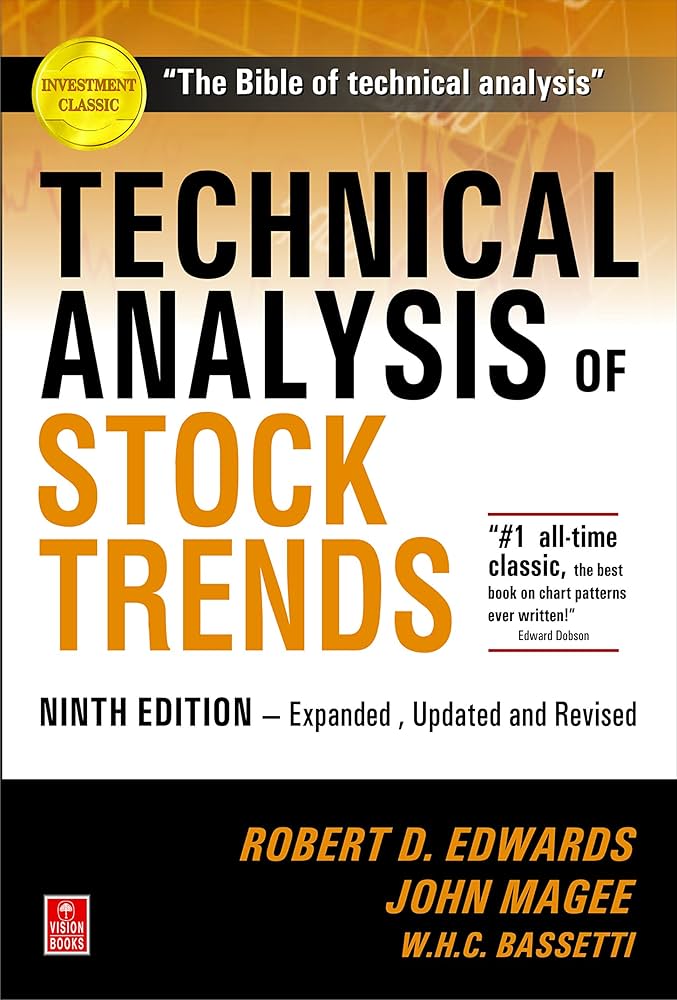
Technical Analysis of Stock Trends - Edwards and Magee
Follow our work
Read some of recent Market Updates to see our approach to technical analysis in action.
Follow us on X for the latest updates.
Ready to bring structured analysis to your trading week?
Start your trial today and get your first look at the Mars Market Update — providing traders with a structured, forward view of global markets.